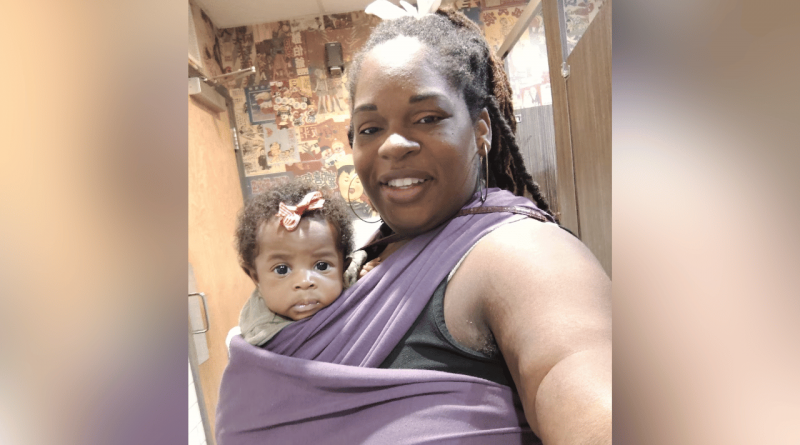
The Judge in the Delivery Room: Florida Mother Forced Into Legal Battle While in Active Labor
Imagine being twelve hours into active labor, focused entirely on the arrival of your child, only to have a nurse walk in and hand you a tablet. On the screen isn’t a family member, but a judge, a group of hospital attorneys, and several doctors. For Cherise Doyley, a Jacksonville, Florida mother and professional doula, this was the moment her delivery room was transformed into a virtual courtroom.
Doyley had arrived at the University of Florida Health Hospital in September 2024 hoping for a natural birth. Because she had undergone C-sections in the past, medical staff were pushing for a surgical delivery to avoid the risk of a uterine rupture. While this is a serious complication, Doyley knew the risks, she also knew that her previous surgical recoveries were so grueling they left her unable to care for her three children at home. She wanted to try a natural delivery first, a choice she believed was her right as a patient.
“That was exactly when I found out that we were going to court,” Doyley recalled. “I was so afraid. I was confused. I did not know what was going on or what to expect.”
For three hours, Doyley had to defend her bodily autonomy while managing contractions, all without a lawyer of her own to represent her. She pleaded with the court to recognize her rights as a mother and a citizen.
“I still have rights as an American citizen and as a patient that I am allowed to decide what goes on with me and my body and my baby,” she testified.
During the hearing, she made it clear that her decision wasn’t just about her, but about the family that depended on her survival and health.
“It was a very hard recovery for me every single time. And it was something that I just didn’t want to go through again,” she explained. She even had to address the ultimate fear: “If it’s between them choosing whether I have to live or the baby has to live, I did tell them that I want to live. I have other children out here in the world that need me. And that is my right because at the end of the day, if I die from a C-section, nobody on this call is going to take care of my children.”
Ultimately, the judge ruled that while an immediate C-section wouldn’t be forced, the hospital had the authority to operate without her consent if they deemed it an emergency. By the following morning, doctors claimed the baby’s heart rate was dropping and rushed Doyley into surgery.
While her daughter, Arewa, is now a healthy one-year-old, the emotional trauma of the experience persists. Doyley views the hospital’s legal tactics as a violation of basic human rights.
“When we use the courts to basically strong-arm, bully someone into an unnecessary medical procedure against their will, it’s akin to torture, in my eyes,” she said. Her story remains a chilling example of the battle for maternal autonomy in the modern medical system.